Asia’s Most
Exclusive University
Admission By Invitation-Only | Elite Outcomes
| Premium Master of Science in Education Management
An Exclusive Talent Powerhouse
Binary University exists to transform ambitious global citizens into Extraordinary Talents through its Premium Postgraduate Programs. Our Binary Premium Master of Science in Education Management programmes, each strictly capped at only 45 students are not for everyone. They are designed for individuals seeking elite careers, global mobility, premium compensation and measurable outcomes—not just a degree.
Most universities have become graduate factories, mass producing degree holders every year. On the other hand, Binary University focuses on creating Exclusive Talents that first class employers truly value thus providing the best financial outcomes for our students.
• 45 students per Premium Master of Science in Education Management only
• Admission By Invitation Only
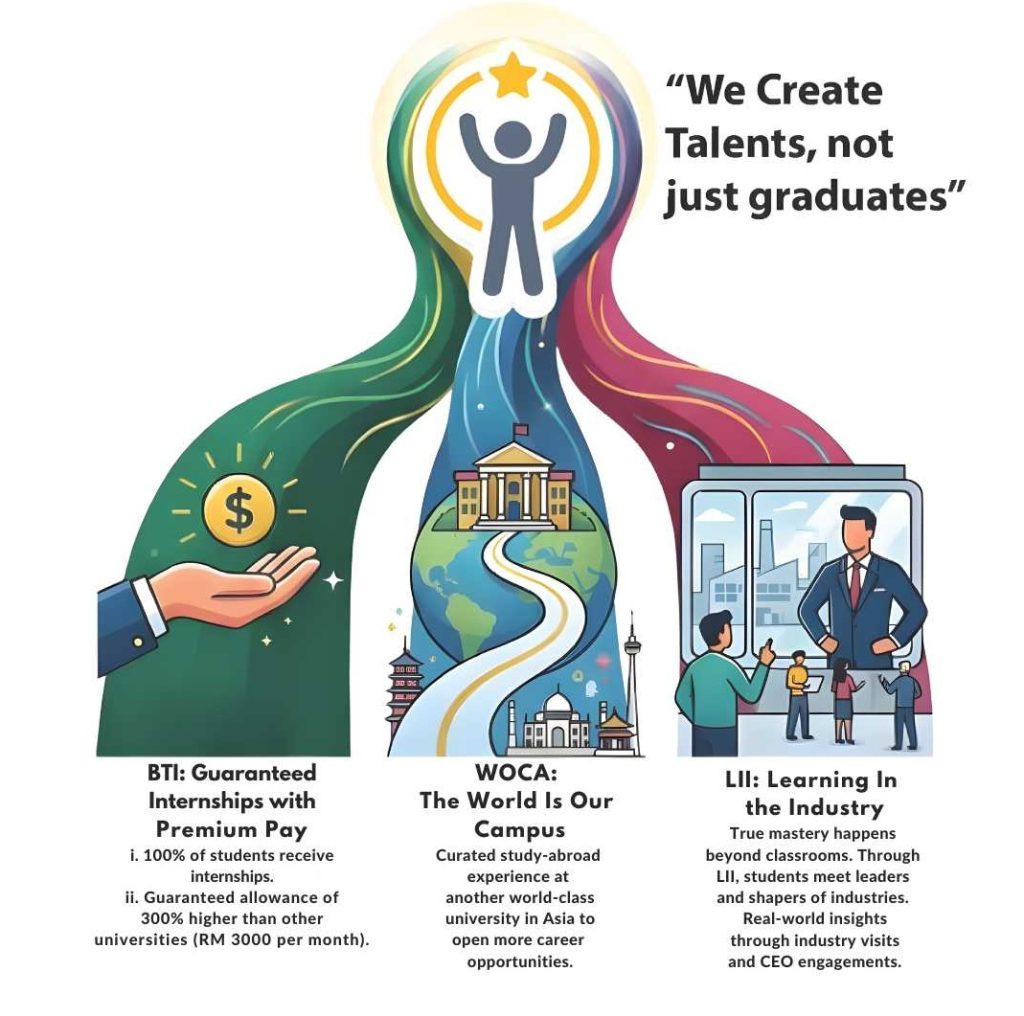
• Guaranteed Internship Allowance of RM3000 per month
• Industry-aligned, future-proof specialisations
• Internationally recognised master providing global career opportunities to work anywhere in the world.
Premium Master of Science in Education Management
(By Research)
Aim
The aim of the Binary Premium Master of Science in Education Management is to produce globally competent, research-oriented educators who can transform teaching and learning systems by integrating best-practice insights from the world’s highest-performing education systems. Through advanced research, international faculty expertise and a real-world internship, graduates will be equipped to elevate pedagogical quality, systemic effectiveness and student outcomes in diverse educational contexts. The Binary MSc in Education Management is the only program in the world that systematically analyze and transfer practices from top-ranked PISA systems such as Singapore, Japan, Finland and other high-performing education systems.
Learning Outcomes
❖Conduct independent, high-quality research in cutting-edge areas of education management and pedagogy.
❖Critically evaluate diverse instructional systems and policies from leading PISA-ranked countries and adapt best practices to local contexts.
❖Design, implement, and evaluate educational interventions that enhance student learning and teacher effectiveness.
❖Lead educational change initiatives using evidence-based strategies and innovative management approaches.
❖Communicate research findings and policy recommendations clearly to academic, professional, and policy audiences.
❖Demonstrate professional competence and ethical leadership gained through the internship and academic coursework.
Benefits
❖World-Class Curriculum: Instruction by educators and researchers from Top PISA-ranked countries with proven high student performance in global assessments.
❖Research-Intensive Training: Offers 9 areas of specialised research. Builds advanced skills in educational inquiry, policy analysis, and innovation.
❖Paid Internship (RM 3000/per month): 4 months of hands-on experience in educational institutions or agencies, enhancing employability and real-world impact. (Only for to Full-Time students).
❖Global Perspective: Deep understanding of international pedagogy trends and cross-cultural best practices.
❖Career Advancement: Opens pathways to leadership roles in educational administration, policy, curriculum design, and consultancy.
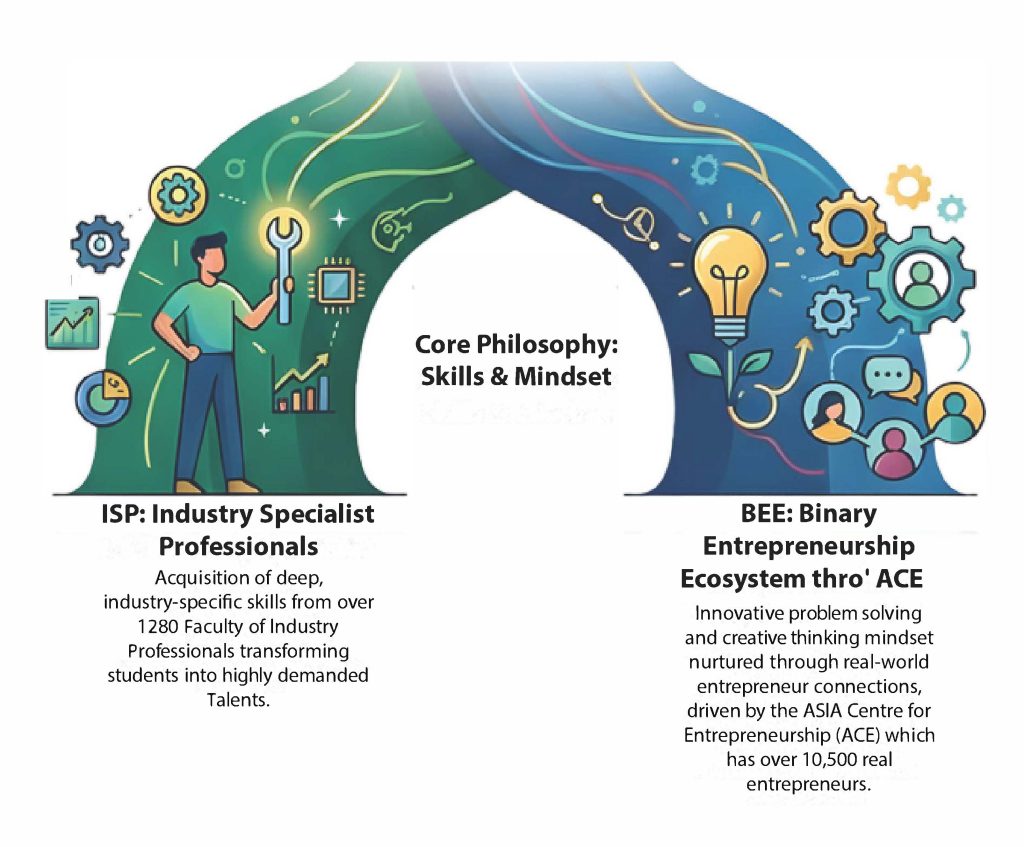
OUR 5 PREMIUM USPs
9 Research Areas (RA)
The Binary MSc in Education offers 9 areas of research. Each area has over 10 sub-research areas, thus providing over 90 sub-research opportunities to candidates.
RA 1: Precision Instruction &
Cognitive Mastery Systems
Top PISA systems achieved dominance by institutionalising structured problem-solving and mastery progression. Read More In PISA 2022, top performers scored over 100 points above the OECD average in Mathematics — equivalent to nearly three years of schooling. Their success stems from disciplined lesson design, guided practice, and deep conceptual sequencing rather than content overload. This specialisation examines the cognitive architecture behind mastery-based instruction and equips leaders to institutionalise precision teaching models that produce sustained academic superiority.
RA 2: Elite Teacher Selection &
Professional Capital
High-performing systems treat teaching as a top-tier profession. Read More Finland admits fewer than 10% of applicants into teacher education. Singapore recruits from the top academic cohorts and funds full professional preparation. Research shows teacher quality accounts for up to 30% of student variance in achievement. This specialisation analyses recruitment selectivity, mentoring architecture, and professional capital systems that create a high-trust, high-competence teaching force capable of delivering consistently superior student outcomes.
RA 3: Curriculum Architecture &
National Coherence
Top PISA nations engineered tightly aligned national curricula. Read More They prioritise depth, sequencing, and cumulative mastery. Rather than broad superficial coverage, they focus on fewer topics taught rigorously. The result: performance margins exceeding OECD averages by over 90–100 points across core domains. This research area dissects curriculum engineering — vertical alignment, cognitive load calibration, and standardisation discipline — enabling leaders to redesign fragmented systems into coherent, performance-driven academic frameworks.
RA 4: High-Impact Assessment
Ecosystems
Elite systems use assessment as a precision instrument. Read More Continuous formative diagnostics, structured feedback loops, and calibrated national benchmarking drive instructional refinement. OECD findings show systems with strong formative assessment cultures experience significantly narrower performance gaps. This specialisation explores assessment ecosystems that integrate data analytics, teacher feedback literacy, and systemic monitoring to create performance transparency and sustained academic lift.
RA 5: Strategic Digital &
AI Integration
Leading systems do not adopt technology indiscriminately. Read More They integrate it strategically. Estonia, one of Europe’s strongest digital education performers, embedded coding and digital literacy nationally. Over 60% of OECD schools now use digital tools, but impact depends on pedagogy design. This specialisation examines AI-enabled adaptive learning, digital governance, and evidence-based technology integration models that enhance engagement while protecting instructional rigor and equity.
RA 6: Equity Engineering &
Achievement Gap Reduction
Top systems achieved high averages without sacrificing equity. Read More While OECD data show disadvantaged students score on average 88 points lower, high-performing nations minimise this gap through targeted resource allocation, early intervention, and structured support systems. This research area analyses equity engineering frameworks that combine high standards with systematic scaffolding — producing excellence with inclusion rather than trade-offs.
RA 7: System Leadership &
Reform Governance
Sustained excellence requires disciplined leadership. Read More Research shows effective school leadership is second only to classroom teaching in influencing outcomes, contributing up to 25% of performance gains. High-performing nations institutionalise distributed leadership, performance accountability, and long-term policy stability. This specialisation develops strategic reform architects capable of aligning policy, pedagogy, and institutional culture to drive national-level transformation.
RA 8: Early Foundations &
Learning Trajectory Design
PISA data consistently show strong early childhood participation. Read More This correlates with higher literacy and numeracy performance at age 15. Top-performing systems invest heavily in foundational years, emphasising structured play, language immersion, and early numeracy mastery. This research area focuses on longitudinal learning design — building cognitive resilience and academic discipline from early childhood to adolescence — ensuring sustained high performance over time.
RA 9: Talent Pipeline Design &
Teacher Education Innovation
Finland and other top systems maintain rigorous teacher preparation. Read More Strong practicum integration and evidence-based pedagogy training distinguish these models. Selective entry and intensive preparation correlate with consistently high national outcomes. This specialisation examines teacher pipeline engineering — from selection metrics to practicum design — enabling nations and institutions to construct elite educator workforces that sustain global competitiveness.
*RA = Research Areas
core subjects

audit workshops
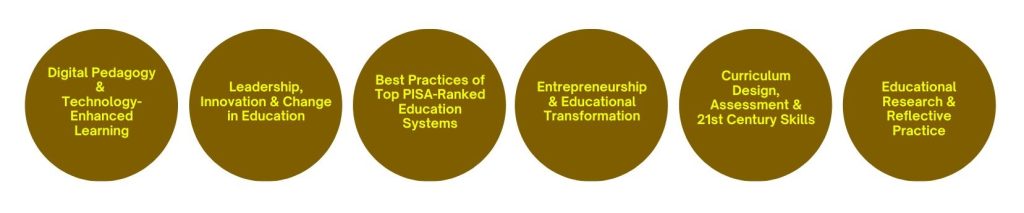
Note: Audit workshops are all assignment based. No exams.
Delivery Mode
You can choose to pursue the Premium Master of Science in Education Management in one of the following 2 ways.
Method A: WINTER-SUMMER RESIDENTIAL PROGRAM
For some applications e.g. from China, it is a requirement from their government that a minimum residential period must be observed for recognition purpose. For these candidates, the Winter-Summer Residential Program has been specially designed to allow them to attend in Jan-Feb (Winter) and Sept- Oct (Summer). Candidates from other countries who want to join this option are welcome.
Method B: FULL-TIME ON CAMPUS
For international students, the program requires a minimum of 16 months of physical on-campus study at our Malaysia campus to ensure a comprehensive and immersive academic experience. To facilitate smooth enrollment and maintain full compliance with immigration regulations, students must obtain a valid Student Visa prior to commencing the program.
ENTRY REQUIREMENTs
Holders of the following qualifications may apply to pursue the Premium Master of Science in Education Management
(a) Hold a recoqnised Bachelor degree in Education or related areas with minimum CGPA of 3.0/4.0 (Grade B/Second Class)
(b) Hold a recoqnised Bachelor degree in any other discipline with minimum CGPA of 3.0/4.0 (Grade B/Second Class). Such candidates need to complete pre-requisite subjects (one semester Bridging Program) as determined by the Board of Studies.
ADMISSION BY INVITATION ONLY
As all our programs are exclusive, only 45 places are available per full-time program. Only the best suited students who can maximize the extraordinary benefits (5 USPs) offered by Binary University will be invited to join our programs. To establish who are the best suited students, our Admission Process involves the 3 STEPS below.


Next intakes
26th May 2026 | 15th Sept 2026
Invitation & student visa
Upon receiving the Letter of Invitation,
❖ You must obtain the Student Visa at least 2 weeks before arrival@Binary University. The Visa Application process will take 6-8 will be explained in the Invitation Letter.
❖ You will be welcomed to a Grand Orientation Program to meet your global peers who will be the future leaders and shapers of different industries. Soon, you can work anywhere in the world or create your own empire.
PAYMENT
❖ The application fee is USD100. Which must accompanied with your Application Form.
❖ Upon making the above payment, please send proof of payment (attach receipt) to [email protected]